A penile implant (penile prosthesis) is a device placed inside the erectile bodies of the penis to restore a reliable, controllable erection. It is the recommended option when tablets, injections and vacuum devices have stopped working, and it carries the highest satisfaction rate of any erectile dysfunction treatment.
Also referred to as: penile prosthesis, inflatable penile prosthesis (IPP), three-piece penile implant, penil protez, erection implant.
What a penile implant actually is
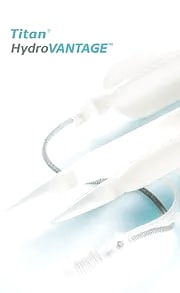
The penis becomes erect when two sponge-like cylinders that run along its length — the corpora cavernosa — fill with blood. When the tissue inside those cylinders is scarred, fibrotic or starved of blood supply, no amount of medication can make them fill properly. A penile implant replaces that hydraulic function mechanically: two soft silicone cylinders are placed inside the corpora cavernosa, in the same anatomical space the blood used to occupy.
In a three-piece inflatable device, those cylinders are connected by discreet tubing to a pump hidden inside the scrotum and a fluid reservoir positioned behind the abdominal wall. Squeezing the pump moves sterile saline from the reservoir into the cylinders, producing a firm erection within seconds. Pressing a release valve at the base of the pump returns the fluid and the penis becomes soft again. Nothing is visible from the outside, and nothing about the device is apparent to a partner.
Sensation, orgasm and ejaculation are not produced by the corpora cavernosa, so an implant does not change them. Men who could reach orgasm before surgery continue to do so afterwards. What changes is the ability to produce a rigid erection, on demand, for as long as it is wanted — without tablets, injections, timing or anxiety.
Who is — and is not — a candidate
Implant surgery is irreversible: placing the cylinders permanently alters the erectile tissue, so non-surgical options can no longer work afterwards. That single fact governs how carefully candidacy is assessed.
A penile implant is usually the right answer when
- Tablets such as sildenafil or tadalafil have been tried at full dose and no longer produce a usable erection
- Intracavernosal injections work poorly, cause pain, or have become unacceptable as a long-term routine
- Erectile dysfunction follows radical prostatectomy, radiotherapy or pelvic surgery and has not recovered after 18–24 months of rehabilitation
- Long-standing diabetes has caused irreversible small-vessel and nerve damage
- Peyronie’s disease has produced both curvature and erectile failure, so the two problems can be solved in one operation
- Extensive corporal fibrosis has followed priapism, infection or a previously removed implant
We will advise against surgery, or delay it, when
- Non-surgical treatments have not yet been given a genuine trial at proper doses
- An active urinary, skin or dental infection is present — every source of bacteria must be cleared first
- HbA1c is above roughly 8.5%, because poor glycaemic control sharply increases device infection risk
- Erectile difficulty is primarily situational or psychogenic — good spontaneous or nocturnal erections are a red flag against implanting
- Expectations centre on gaining length or girth; an implant restores rigidity, it does not enlarge
- Manual dexterity or cognition would make operating the pump unrealistic, and no partner can assist
Device options and how we choose between them
We implant devices from the manufacturers whose long-term registry data we can actually audit. The choice is made with you at consultation and depends on anatomy, hand strength, previous surgery and whether the abdomen has been operated on before.
| Device type | How it works | Best suited to | Trade-offs |
|---|---|---|---|
| Three-piece inflatable (Coloplast Titan, Boston Scientific AMS 700) | Cylinders, scrotal pump and a separate abdominal reservoir; fully rigid when inflated, completely flaccid when deflated | The great majority of patients — it produces the most natural flaccid and erect states | Most components, therefore the most mechanically complex; requires space for a reservoir |
| Two-piece inflatable (Ambicor) | Cylinders with a small integrated fluid store and a scrotal pump; no abdominal reservoir | Men who have had extensive pelvic or bladder surgery where reservoir placement is unsafe | Less complete flaccidity and slightly lower rigidity than a three-piece device |
| Malleable / semi-rigid (Coloplast Genesis, Rigicon Rigi10) | A pair of bendable rods held permanently in the corpora; positioned up for sex and down otherwise | Limited hand function, severe fibrosis, or where operative time must be kept to a minimum | The penis is always firm; concealment under clothing takes practice |
| Length-expanding cylinders (AMS 700 LGX) | A three-piece device whose cylinders expand in girth and in length on inflation | Men concerned about the perceived shortening that follows long-standing severe ED | Not appropriate where the tunica is heavily scarred or after grafting |
Every device we implant carries an antibacterial surface — InhibiZone impregnation on AMS devices, a hydrophilic coating loaded with antibiotic solution on Coloplast devices. Modern coated implants have reduced infection rates to roughly 1% in first-time procedures.
The operation, step by step
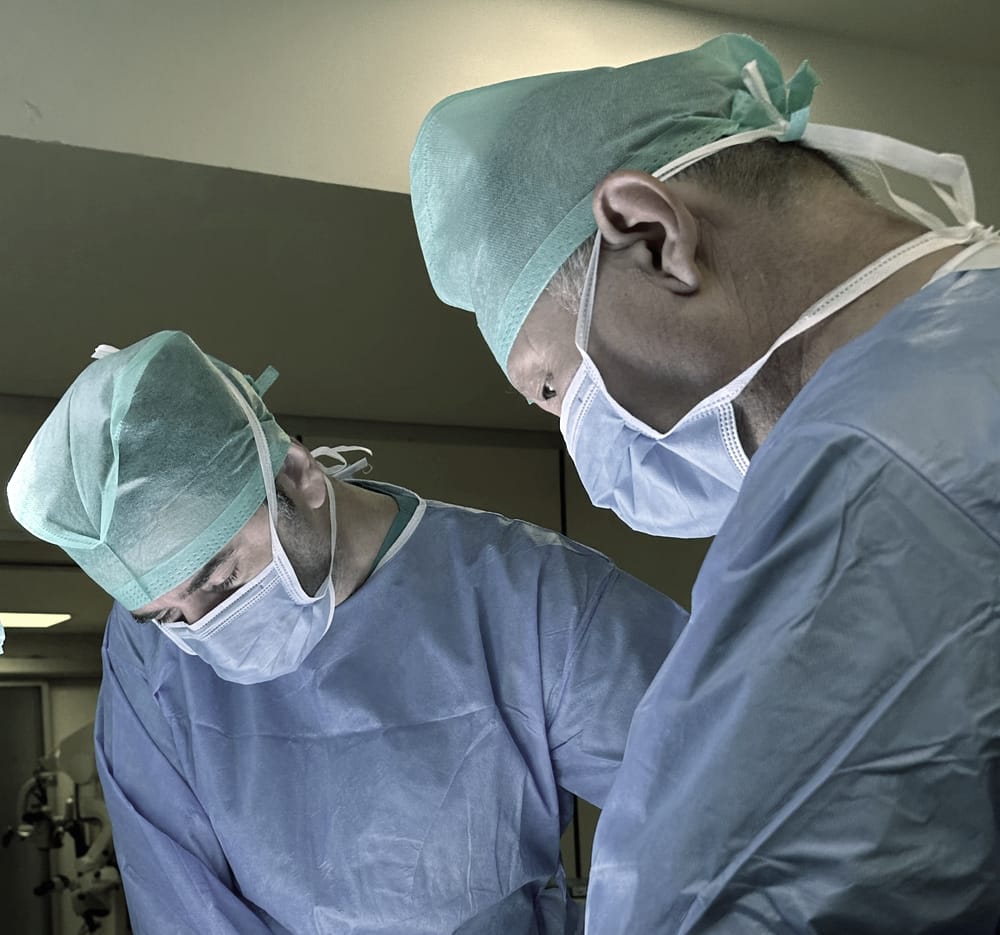
Surgery takes 45 to 90 minutes for a first-time implant. We use a penoscrotal incision — a single 3–4 cm cut at the junction of the penis and the scrotum — for most cases, because it gives direct access to both corpora and to the pump position through one wound, and it leaves no scar on the shaft. An infrapubic approach is chosen selectively, mainly where the reservoir needs to be placed under direct vision.
Intravenous antibiotics are given before the first incision. The skin is prepared with alcoholic chlorhexidine and, in patients who have not been circumcised, the area is prepared with particular attention to the coronal sulcus. The operating team then works to a strict no-touch protocol: the device never contacts skin, gloves are changed before it is handled, and a dedicated instrument set is used for implantation only.
Each corpus cavernosum is opened over a short length, dilated to a measured diameter, and its full length is measured from the crus to the glans. Sizing is the single most important technical step in the operation — cylinders that are too short leave the glans unsupported and drooping, cylinders that are too long risk erosion. Rear tip extenders are used to fine-tune the fit in millimetre increments.
The cylinders are placed, the pump is positioned in a dartos pouch in the scrotum so that it sits low and is easy to find by feel, and the reservoir is placed in the space of Retzius behind the abdominal wall or, in previously operated abdomens, in a submuscular position. The device is cycled several times on the table to confirm rigidity, symmetry and correct glans support, then left partially inflated to reduce bruising. A urinary catheter stays in overnight.
Recovery week by week
The pattern of recovery is highly predictable. Knowing what is normal at each stage is the best protection against unnecessary worry once you are home.
- Day 0 — day of surgery You wake with a catheter, a light dressing and the penis strapped upward against the abdomen to control swelling. Discomfort is managed with simple analgesia. You will be up and walking the same evening.
- Day 1 — discharge The catheter and dressing come off, the wound is checked, and you are shown how to keep the device partially inflated. You return to your hotel with your patient assistant and a written medication plan.
- Days 2–7 — in Istanbul Scrotal swelling and bruising peak around day three and then settle. You walk daily, avoid lifting, and attend a wound review at the clinic on roughly day five. Most patients are comfortable on paracetamol alone by the end of the week.
- Weeks 2–3 — at home Wound sutures are dissolvable. Bruising fades from purple to yellow. Desk-based work is usually resumed between day seven and day ten; physical work waits until week four.
- Weeks 4–6 — activation At a video review the device is activated. You are taught to inflate and deflate it, and asked to cycle it twice daily. This step matters: regular cycling stretches the capsule that forms around the cylinders and gives the best long-term rigidity and length.
- Week 6 onward — intercourse Sexual activity resumes once the pump moves freely and the wound is fully healed. Most men need two to three attempts to become confident with the mechanics. Reviews follow at three months and twelve months, then annually.
What the results are, honestly
Penile prosthesis surgery has the highest satisfaction rate of any treatment for erectile dysfunction, but its limits should be understood before you travel.
- Published satisfaction rates run between 92% and 96% for patients, and are comparable for partners.
- The erection is reliable every time, lasts as long as you want, and is not affected by alcohol, fatigue, anxiety or medication.
- Sensation, orgasm and ejaculation are unchanged. If you could climax before surgery, you will afterwards.
- The erect penis will be as long as your corpora will allow — an implant does not add length, and men with long-standing severe ED often have some shortening that predates surgery.
- The glans does not become engorged by the device. Some men choose to use a low-dose PDE5 inhibitor afterwards purely for glans fullness.
- Mechanical survival is roughly 90% at five years and 75–80% at ten to fifteen years. A device that fails is replaced in a straightforward second operation.
Risks and complications
These are the complications that matter, with the frequencies we quote at consultation. We would rather you read them here than discover them later.
- Device infection (about 1–2% first-time, 3–5% in revision or diabetic patients). The most serious complication. It usually requires removal of the device, either with immediate salvage and re-implantation or with delayed replacement. Coated devices, a no-touch technique and strict glycaemic control are what keep this number low.
- Mechanical failure (roughly 1–2% per year, cumulative). Tubing, pump or cylinder failure presenting as loss of rigidity. Corrected by replacing the failed component or the whole device.
- Persistent pain (5–10% at three months). Usually settles by six months. Prolonged pain warrants review for sizing or positioning problems.
- Glans droop, or SST deformity. The glans hangs forward because it is not supported by the cylinders. Managed with a glanspexy or, in some cases, cylinder revision.
- Erosion or extrusion. The device presses through the tunica or urethra — rare, more likely with over-sizing, poor sensation or uncontrolled diabetes.
- Auto-inflation or reservoir problems. Partial spontaneous inflation, or a palpable reservoir. Modern lock-out valves have made this uncommon.
- Perceived shortening. The commonest source of disappointment. It is generally pre-existing rather than caused by surgery, and is the reason we measure and document stretched length before the operation.
Why patients travel to Istanbul for implant surgery
Penile prosthesis surgery is volume-dependent. Complication rates fall measurably as an individual surgeon’s annual case numbers rise, and in many countries prosthetic urology is spread thinly across a large number of low-volume operators. Istanbul concentrates the opposite pattern: a small number of centres performing this operation weekly, with the theatre discipline that comes from repetition.
The practical arguments follow from that. Waiting lists for an elective prosthesis in publicly funded systems commonly run past a year, and where the procedure is available privately it frequently sits outside insurance cover. In Istanbul the same devices — the same Coloplast and Boston Scientific implants, with the same manufacturer warranty and the same serial number registration — are implanted within weeks of enquiry, at a total cost that typically includes the hospital, the device, accommodation, transfers and interpreting.
Istanbul is also, prosaically, easy to reach: direct flights from most of Europe, the Gulf, North Africa and Central Asia land at two international airports within an hour of the clinic, which matters when a companion is travelling with you.
Questions we are asked about inflatable penile implant
Will anyone be able to tell that I have an implant?
No. Every component sits beneath the skin. When the device is deflated the penis looks and feels normal, and the pump is felt only as part of the scrotal contents. Partners are not aware of the device unless you tell them.
Does a penile implant affect orgasm or ejaculation?
It does not. Sensation is carried by the dorsal nerve and orgasm is generated separately from the erectile bodies, so neither is altered by placing cylinders in the corpora cavernosa. Men who ejaculated before surgery continue to ejaculate; men who had a dry orgasm after prostate surgery will still have one.
How long does a penile implant last?
Modern three-piece devices have a mechanical survival of roughly 90% at five years and 75–80% at ten to fifteen years. Many men never need a replacement. If a device does fail mechanically, exchanging it is a shorter and simpler operation than the first implant.
Will the implant make me longer or thicker?
No. An implant restores rigidity within the length your own corpora can accommodate. If length is your main concern, we measure stretched penile length at consultation and discuss it frankly before you commit — and, where appropriate, we discuss length-expanding cylinders or a separate girth procedure.
Can I have an implant if I have had a radical prostatectomy?
Yes, and post-prostatectomy erectile dysfunction is one of the commonest indications. We normally allow 18 to 24 months of penile rehabilitation first, since some men recover naturally in that window. Previous pelvic surgery does influence where the reservoir is placed, which is why we review your operative history in advance.
What happens if the device becomes infected?
An infected prosthesis cannot be treated with antibiotics alone. In most cases we perform a salvage procedure — removing the device, washing the cavities through a sequence of antiseptic solutions, and implanting a new device in the same sitting — which succeeds in the large majority of cases. If salvage is not appropriate, the device is removed and replaced after three to six months.
How soon after surgery can I have sex?
Six weeks. The device is activated at four to six weeks and cycled daily for a fortnight before intercourse, so the tissue capsule has stretched and the wound has fully healed. Attempting earlier risks pain and pump displacement.
Is the operation covered by my insurance at home?
Some private policies reimburse prosthetic surgery abroad and many do not. We issue a full itemised invoice, the device serial numbers and an English-language operative report, which is what most insurers require for a reimbursement claim. We cannot guarantee any individual insurer’s decision.
Clinically reviewed by the Santa Urology surgical team. This page describes typical outcomes reported in the surgical literature and in our own practice; individual results vary and nothing here is a substitute for a personal consultation. See our medical disclaimer.